In the News: Enhancing Safety in Schools Across Minnesota
Read the Story

SmartPass Co-Founders Listed on Forbes 30 Under 30
Read the Story




.avif)

Teachers face a variety of challenges that can reduce instruction time. Classroom disruptions from administrative tasks, behavioral issues, students leaving and returning to class or being tardy, task switching, and more can derail learning time. The school learning environment, classroom expectations, and student engagement issues all have an effect, as well.
Even before COVID, 40 to 60% of students were showing signs of being disengaged from their learning in school. Lowered student engagement makes the instructional time that is happening less effective and increases the chance of further disruptions, which causes even more students to feel disengaged.
Classroom disruptions and disengagement tend to spur more of the same issues, which make it increasingly difficult to maximize student learning. Yet studies have shown that maximizing instructional time is crucial for increasing student learning outcomes and building positive relationships and school culture.
Lost instructional time due to classroom disruptions is so common that teachers reported an average of 15 interruptions each day in a recent study, where 59% of them indicated it at least somewhat interfered with classroom instruction. Even the quickest interruptions can derail students significantly, with teachers in the study estimating over six minutes of each hour lost to refocusing on learning after the disruption. Other research agrees, with estimates of eight to 25 minutes of time to refocus on a task after a brief distraction, depending on its complexity.
That’s a lot of lost instructional time! It adds up to 10 to 20 days of the school year spent just on managing disruptions and refocusing students. Since student engagement and instructional time are key factors in student learning outcomes and achievement, that makes a big impact.
The good news? The same study indicated that when schools intentionally approach maximizing instructional time and decreasing disruptions, it makes a difference.
Classroom Management and Teaching Strategies
A good classroom management plan that’s clearly communicated and consistently implemented will go a long way in maximizing instructional time. Teachers can work with students to map out class routines, outline behavior expectations, and set students up for success. Cooperative planning helps students feel more involved and understand things more clearly while building a sense of community and buy-in. This increases student engagement and prevents many classroom disruptions before they happen.
Recent surveys with students have shown the student disengagement trend is continuing, but also shared helpful insights on how to address it. Many students felt they actually weren’t being challenged enough and shared that feeling like a teacher cares about them as a person and makes it easy to understand content are the two most important attributes of a good teacher.
Student accountability is important, too. Helping students with their time management skills is important for life skills, but it will also help maximize daily instructional time in the classroom. Teachers can work on the development of age-appropriate time management skills like covering organization to make items easier to find or using a visual timer to help learn pacing. They can also offer support like visual schedules and social stories. These can decrease slowdowns from missing materials or disruptions from students caught off guard at transitions.
Tricky Transition Times
Transition times are some of the most likely culprits for derailing classroom instruction. Classroom routines at the beginning and end of lessons can move things along and help students get into a learning mindset more quickly.
Keeping hallways and common areas more peaceful and organized has an impact on classroom instruction both during and between classes. Students who are able to move through the hallways with lower stress will be able to focus on their instruction better when they arrive at the classroom. And quieter hallways during class periods mean fewer distractions and disruptions for students and teachers to worry about.
Student Movement Outside of the Classroom
Of course, it doesn’t matter how smoothly classroom transitions go or how much quality instruction teachers fit into their lessons when students miss class.
Even the most engaged classrooms have students moving in and out of the classroom for personal and academic reasons. Those times can be disruptive because teachers have to pause instruction to talk with the individual student and figure out if it’s appropriate to issue a hall pass. This adds to teachers’ already long to-do lists and distracts them and the students.
Ineffective hall pass systems also leave a big opening for students to stay out of class. They may just want to miss a subject, which leads to less learning time. Or they could be engaging in actions that create further behavioral or social issues, like vaping, bullying, or vandalism of school and student property. Schools should take the time to create a school-wide process for hall passes, as this is an area that’s much more effective when it’s cohesive, and everyone knows what to expect.
If classroom instructional time is being disrupted consistently, digging into the root cause can have a huge impact. Students are less likely to get frustrated with ineffective attempts, and teachers aren’t losing time they already have far too little of.
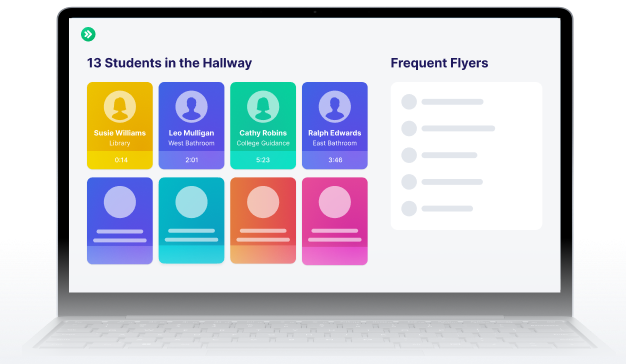
Technology solutions like Raptor SmartPass can help gather important missed class time data effectively and efficiently while making it easier to share and coordinate across the school. The system is carefully designed to support schools in behavior management and classroom routines. Students gain autonomy in their movement, while teachers and school staff can plan, implement, and track better hall pass policies with less time and effort. Teachers can easily see what a student is doing throughout the day and policies to manage student movement can be applied more consistently. Plus, this is done at the touch of a button, reducing unnecessary interruptions.
Teachers are often under increasingly heavy workloads. The ease of use, simplified processes, and easier and more detailed reports on missed classroom time to use in communication with families all help. That kind of intentional support and system implementation by a school’s administration is one of the best ways to build a strong school culture and prevent teacher burnout.
Features like the ability to limit the total number of students out at once, time limits on individual passes, and daily pass limits help keep things flowing and boost student accountability to make sure they are in class when they need to be. For example, Pineland Region High School decreased students cutting class by 60% when they implemented a Raptor SmartPass digital hall pass system.
Students also gain easy access to regularly scheduled hall passes for personal needs, flex periods, medical care, and more. All of this avoids distractions, lowers stress for both teachers and students, decreases transitions, and makes it easier to maximize instruction time.
Maximizing instructional time in the classroom is essential at each grade level and for any subject. The many impacts of more and better learning time can include a positive school culture, lower stress for teachers and students, and more positive student outcomes short and long term. Start by involving students and families in the conversations around the classroom policies, procedures, and environment. Be clear and collaborative in communication and take time to teach and reteach expectations once they’ve been outlined.
Look for ways to simplify, streamline, and improve the process with tools and resources like Raptor SmartPass. Taking time to build a good foundation of support pays off, especially when it covers so many needs and can provide further data and resources for teachers and staff as the school year progresses. To learn more, request a time to speak with a member of our team.